

The 15% Difference: How Commercial Scenting Keeps Customers in Your Business Longer
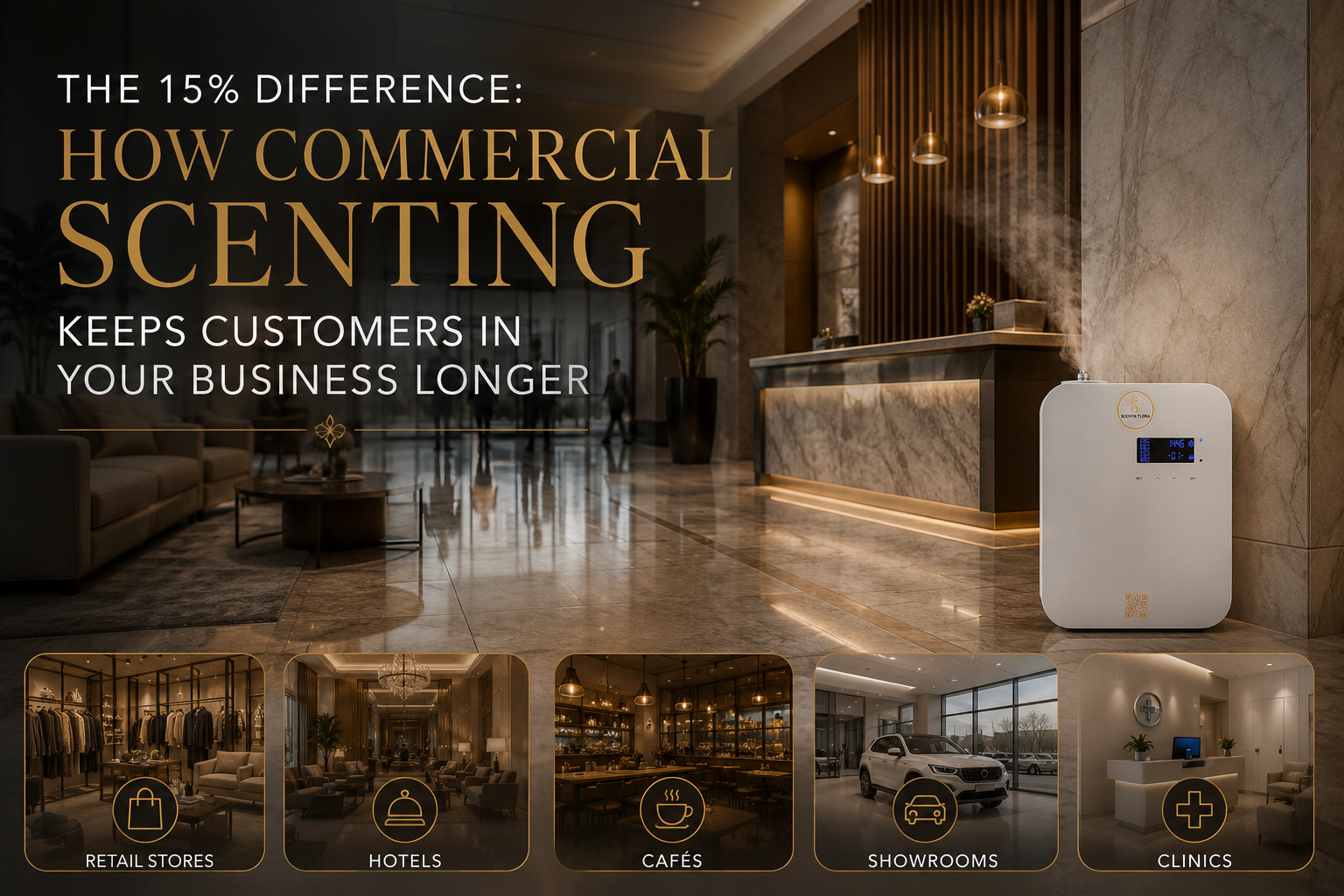
More time inside your space means more opportunities to engage, influence purchasing decisions, and build lasting customer relationships.
A customer enters a boutique to look at one item. Ten minutes later, she is browsing another collection.
A couple visiting a property showroom stays long enough to ask about a second unit.
Someone waiting for a vehicle service walks through the dealership instead of sitting near the entrance checking the time.
Small changes in customer behavior can have considerable commercial value. Pleasant ambient scent is one environmental factor capable of influencing how people experience a space, including how long they choose to remain there.
Research into ambient scent has reported positive effects across several areas of consumer behavior, with some studies and broader analyses showing improvements reaching roughly 15% depending on the setting and outcome being measured.
For businesses, even a modest increase in time spent on site can create valuable opportunities.
Dwell Time Is More Than a Marketing Metric
Dwell time simply measures how long someone stays.
Its commercial meaning, however, changes from one environment to another.
A fashion retailer wants customers to browse more racks. A hotel wants guests to feel comfortable in the lobby, lounge, spa, and other shared spaces. A car dealership needs visitors to spend enough time exploring models, asking questions, and considering options.
Longer visits allow more of the business to be experienced.
Products get noticed. Conversations happen. Displays receive attention. Customers become less hurried.
No fragrance can force someone to stay, nor should it. Good commercial scenting works more subtly by helping the environment feel pleasant enough for customers to move at a more comfortable pace.
Why More Time Can Mean More Revenue
Consider how people shop.
Very few purchasing decisions happen the instant someone crosses the door.
Customers browse. Compare. Pick something up. Put it down. Walk around. Speak to someone. Reconsider.
Every extra few minutes creates another possible interaction.
For a retailer, it could mean discovering an additional product. In a café, another drink or dessert. At a hotel, a guest might spend longer in the lounge or explore another facility. In a showroom, additional time may lead to a more detailed conversation with a sales adviser.
Revenue is not created by dwell time alone. The opportunity comes from what the business can do with the customer’s attention while they are there.
Scent Has an Unusual Relationship With Memory
Walk past a luxury fragrance associated with a childhood home, holiday, hotel, or person and the memory can arrive before you consciously identify the smell.
Olfaction has a close relationship with areas of the brain involved in emotion and memory. Commercial scenting uses that connection carefully.
A well-chosen luxury home fragrance can become part of how a place is remembered.
Customers might not recall the exact lighting temperature in a hotel lobby or the material covering a boutique wall. They can still remember how the environment felt.
Over repeated visits, fragrance can become one of the sensory cues associated with a brand.
The Best Commercial Scent Often Goes Unnoticed
Effective scenting should not greet customers like someone spraying perfume directly in front of them.
It should sit naturally within the environment.
Too strong and fragrance becomes distracting. Too weak and coverage may become inconsistent. The right balance depends on room volume, airflow, ceiling height, foot traffic, AC systems, fragrance character, and the type of experience being created.
A luxury boutique might call for something refined and restrained. A spa needs an entirely different mood. A busy hotel lobby presents different technical demands from a private clinic.
One fragrance setting cannot serve every space equally well.
Where Longer Dwell Time Matters Most
Retail stores and luxury boutiques have perhaps the clearest connection. Browsing drives discovery, and comfortable customers are more likely to explore beyond the product that first caught their attention.
Shopping malls can use fragrance across entrances, corridors, lounges, and selected zones to build a more distinctive overall environment.
Hotels rely heavily on atmosphere. The lobby often provides the first real sensory impression of the property, long before a guest sees the room.
Cafés and restaurants can benefit from carefully controlled ambient fragrance, although scent selection must complement rather than interfere with food and beverage aromas.
Real estate showrooms and automotive dealerships involve expensive, considered purchases. People need time to look, compare, ask questions, and imagine ownership.
Banks and clinics benefit in another way. Encouraging shopping is not the priority. Creating a calmer, more pleasant waiting experience usually matters more.
The Commercial Value Goes Beyond Immediate Sales
Not every benefit appears on the same day.
A memorable environment can strengthen brand recognition. A comfortable visit can improve the customer’s overall impression. Consistent fragrance can add polish to a space and help separate one physical experience from another.
There is also an operational advantage.
Commercial scent systems can distribute fragrance at controlled intensities and scheduled times without relying on employees to manually spray rooms throughout the day. Larger properties can use systems designed around broader coverage requirements and HVAC infrastructure.
Consistency matters, particularly for brands operating premium spaces.
Why Luxury Brands Create Signature Scents
Luxury is rarely communicated through one dramatic element.
It comes from dozens of details working together.
The lighting feels considered. Materials feel deliberate. Staff presentation matches the surroundings. Music sits at an appropriate level. Even the temperature feels right.
Fragrance belongs to the same sensory system.
A signature scent gives a brand another recognizable characteristic. When customers encounter the same fragrance across repeated visits or multiple locations, the association can become stronger.
The fragrance eventually feels less like something placed in the room and more like part of the place itself.
Scenta Flora Starts With the Space, Not the Machine
Installing a aroma diffuser is easy. Designing commercial scenting properly requires more thought.
Scenta Flora evaluates the environment before determining the appropriate scenting approach. Coverage area, airflow, ceiling height, operating hours, AC configuration, fragrance intensity, customer movement, brand character, and the purpose of the space can all influence the setup.
Solutions can include standalone scent machines or HVAC-connected systems for larger commercial properties, along with programmable schedules and adjustable fragrance intensity.
Fragrance selection also forms part of the strategy.
A hotel looking for a distinctive arrival experience has different needs from a luxury retailer, property showroom, corporate office, or medical clinic. The scent, equipment, placement, and diffusion settings should reflect those differences.
A Few More Minutes Can Change a Visit
Fifteen percent sounds small until it is measured in customer attention.
A few additional minutes might mean another display explored, another product discovered, another conversation with a salesperson, another menu item considered, or simply enough time for someone to develop a stronger impression of the brand.
Commercial scenting cannot replace good products, service, design, or hospitality.
It can make the environment supporting all of them considerably harder to leave.