

Scent Marketing Strategies for Retail, Hotels, and Real Estate in 2026
In 2026, the brands winning in the UAE are not only thinking about how a space looks. They’re thinking about how it feels the second someone walks in. That’s why scent marketing has moved up from “nice ambience” to something closer to smart space design.
The idea is simple: people judge a place in seconds. If the mood is right, they stay longer, explore more, and remember you later. Scent helps create that mood quietly, without adding more screens, signs, or staff scripts.
What Scent Marketing Looks Like In 2026
Scenting used to be one fragrance in one machine. Now it’s planned like lighting or music. Here’s what’s becoming standard in premium spaces:
Hyper-personalized scent zones
Different areas get different moods. A retail store can keep the entrance fresh and energetic, while changing rooms feel softer and more calming. Hotels can keep reception bright and welcoming, while corridors feel calmer.
Seasonal scent transitions
Brands adjust scent with the calendar, not randomly. A lighter, fresher profile during summer, a warmer profile during winter, and a special twist in Ramadan or Eid season, without changing the brand identity.
Signature scent branding
One scent becomes part of the brand. Customers might not say it out loud, but they recognise it. That recognition builds trust.
Smart building integration
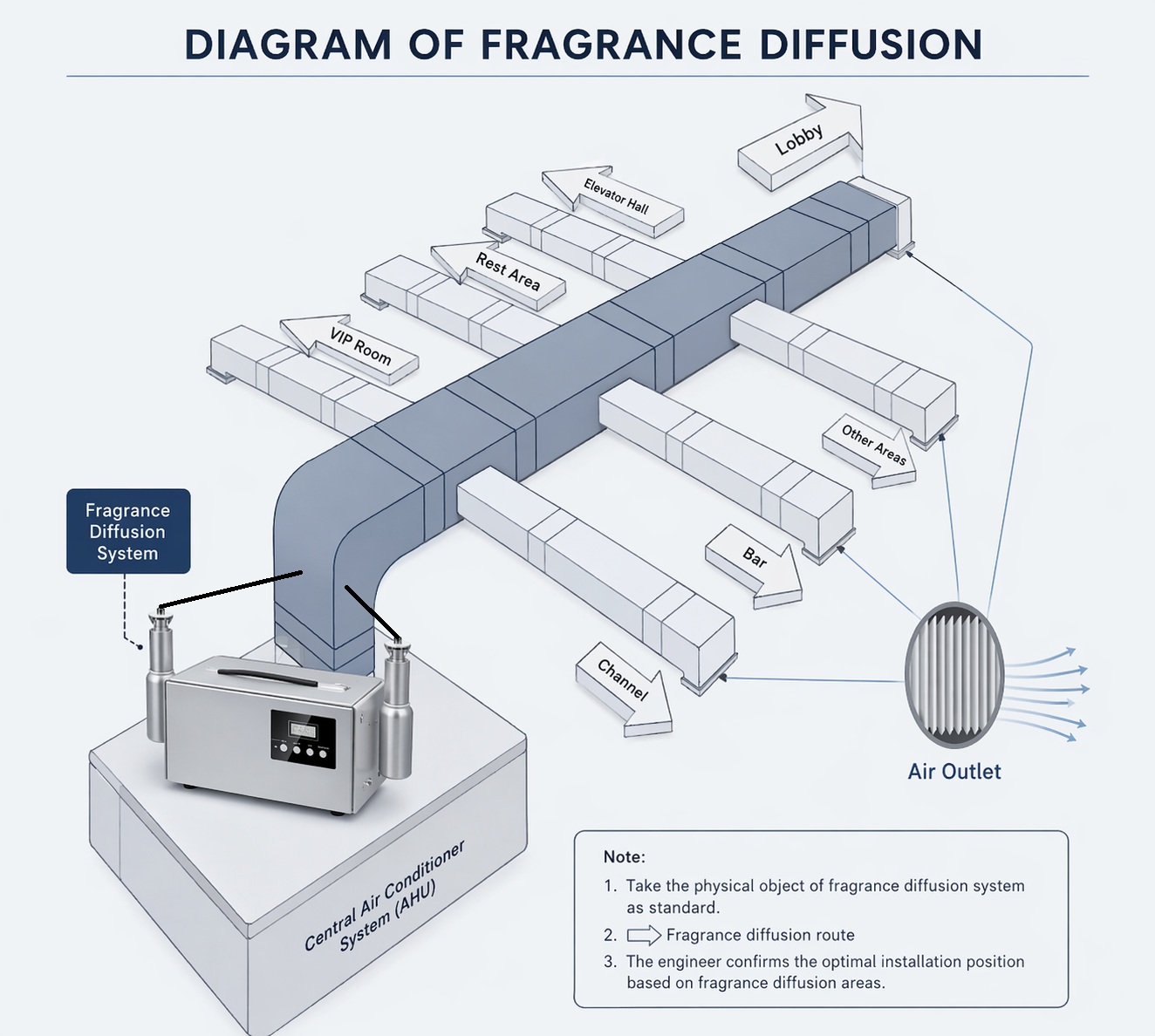
Scent is connected to building systems, schedules, and footfall patterns. In practical terms: stronger diffusion at peak times, lighter diffusion during quiet hours, and consistent delivery through HVAC where it makes sense.
Retail In 2026: Scent That Supports Shopping Mood and Sales
Retail is crowded in the UAE. Stores compete for attention in malls, high streets, and lifestyle destinations. In 2026, smart retail scenting focuses on two things: energy and comfort.
Fresh and energizing scents are used to lift shopping mood, reduce “stale air” feelings, and keep people browsing. When the space feels cleaner and more alive, customers move slower. They look around. They try things. That extra time is where conversions happen.
What’s changing is how retailers apply scent:
- Entrance boost: a brighter, fresher profile right at the door so the store feels instantly inviting.
- Product-zone scenting: small shifts in scent intensity by section, especially in large-format stores.
- Checkout calm: softer diffusion near checkout to reduce rush and friction.
Retail brands don’t want a scent people notice loudly. They want a scent that makes the store feel better, so shoppers stay longer without thinking about why.
Hotels In 2026: Loyalty Is Built On Consistency
Hotels already understand first impressions. The 2026 focus is guest loyalty, and consistency is the main driver. Guests return when the experience feels familiar in a good way. That’s where hotel fragrance consistency becomes critical.
Signature scent branding is central here. The scent should be stable across the guest journey:
- Arrival and reception
- Lift lobby and corridors
- Lounge areas
- Business centers and meeting spaces
If the hotel smells different each visit, the emotional link breaks. If it’s consistent, it becomes part of the hotel’s identity, like the staff tone or the music level.
Hotels are also doing smarter things with scent zones now. For example, a lively scent profile in the lobby can work well, but the same intensity in a corridor can feel too much. So hotels are zoning scent based on how long guests spend in each area.
Real Estate In 2026: Scenting Is Used To Create Attachment
Real estate developers in the UAE are treating scent like staging. It helps buyers feel emotionally connected, especially in showrooms and launches where people need to imagine a lifestyle quickly.
Scent is used to create a premium perception and emotional attachment in three places:
Showrooms and model units
A refined scent makes the space feel more “complete,” like it’s already lived in, not just displayed. That helps people picture themselves there.
Property launches and events
When launches are busy, mixed odors can happen fast. A controlled scent keeps the environment feeling polished and high-end.
Sales galleries and private viewing areas
A calm, premium scent supports focus and longer conversations, which is where serious buying decisions are made.
In 2026, developers also use seasonal transitions more intentionally. A summer launch might lean fresher, while a winter launch can lean warmer, while staying within one consistent brand profile.
The Tech Side: Programmability and HVAC Integration
None of this works if diffusion is random. Strong scent in one corner and nothing in another makes the space feel unmanaged. This is why modern scent machine systems are essential for consistency.
In 2026, scent marketing depends on a few core systems:
- Programmable commercial diffusers that can be scheduled by hour, day, and traffic patterns.
- HVAC scent integration for larger spaces where even coverage matters most.
- Scalable setups so a brand can expand from one location to ten without changing the experience.
For many businesses, leasing options are also becoming popular because it keeps the setup flexible, especially for seasonal campaigns, pop-ups, or new property launches.
Where Scenta Flora Fits In 2026
Scenta Flora positions itself as a modern scent marketing partner, not just a supplier. The value is in planning and execution, not only the fragrance.
That includes:
- Customized fragrance strategies for retail, hotels, and real estate
- Programmable commercial diffuser setups
- HVAC integration for consistent coverage
- Leasing options for flexibility
- Scalable solutions for multi-location brands
Scent Is Not Optional Anymore
In 2026, physical spaces have to earn attention. People can buy online. They can compare prices in seconds. So the spaces that win are the ones that feel better to be in.
Scent marketing is now part of that strategy. Not as “just fragrance,” but as a branding investment that shapes mood, increases engagement time, and strengthens brand recall, especially in experience-driven markets like the UAE.