

What Does a Monthly Scenting Service Include? A Practical Guide for Hotels, Offices and Commercial Spaces
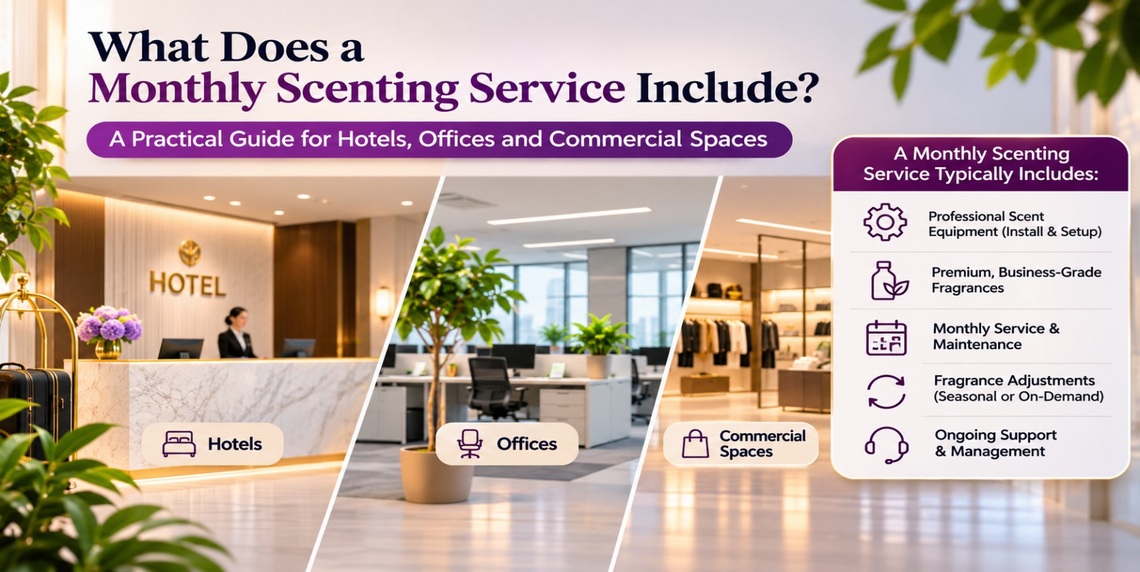
A scent diffuser may be easy enough to purchase, but keeping a commercial space consistently fragranced involves more than installing a machine and filling it with oil. Someone needs to select the right diffuser, monitor consumption, arrange refills, handle technical issues, and make sure the diffuser continues working as the business operates.
For hotels, offices, retail stores, scents for wedding, and other commercial properties, managing all of this internally can become another responsibility for the facilities team. A monthly scenting service offers an alternative: the diffuser and its ongoing requirements are handled through an arrangement with a scenting services provider.
But what does that arrangement actually cover? Does it include the diffuser, fragrance oil, servicing, and repairs? How often does someone visit the premises? What happens if the diffuser stops working?
These are reasonable questions to ask before committing to a monthly scenting service in the UAE. Here’s what facility managers and procurement teams should look for.
It Starts With the Right Diffuser, Not a Standard Package
The first step should be understanding the property rather than selecting a diffuser from a catalogue.
A small reception area, a hotel lobby, and an open-plan office have different scenting requirements. The diffuser needs to suit the area it serves, including its dimensions, ceiling height, layout, and ventilation.
A provider may recommend a standalone diffuser for a defined area or an HVAC-connected system when fragrance needs to circulate through a larger building. Some commercial environments may also require multiple diffusers to cover separate zones.
A site survey helps establish these requirements. Before recommending the diffuser, the provider should assess:
- Total area and approximate room volume.
- Ceiling height and the layout of the premises.
- Air conditioning and ventilation arrangements.
- Number of separate areas requiring fragrance.
- Daily operating hours and expected occupancy.
The business should also know what type of diffuser is being supplied, its coverage specifications, and whether installation is included in the monthly arrangement. A recommendation based only on floor area, without considering airflow and room configuration, may not deliver the expected results.
Fragrance Selection Should Happen Before Installation
A commercial fragrance becomes part of the environment people associate with a business. It should suit the setting, not simply reflect whichever oil happens to be available.
Hotels may prefer a welcoming fragrance for reception areas, while a corporate office might need something subtle that doesn’t interfere with the working environment. Retail businesses have different considerations, particularly when fragrance needs to complement their brand identity.
This is why fragrance sampling should be part of the selection process. Businesses should have an opportunity to review available options before making a final decision.
A useful sampling process should answer three questions:
- Does the fragrance suit the business and its intended atmosphere?
- Is its intensity comfortable for employees, visitors, and customers?
- Does it work in the actual space rather than just smelling pleasant from a sample bottle?
Some providers may also offer recommendations based on the type of business and its preferred fragrance direction. Scenta Flora offers customized scenting solutions for hospitality, retail, and corporate environments, allowing businesses to discuss their requirements before choosing a setup.
What Happens After the Diffuser Is Installed?
This is where the monthly arrangement becomes important. Installation is only the beginning; the system needs attention throughout the agreement.
Fragrance oil refills: The provider should monitor oil consumption and arrange replenishment before the diffuser runs empty. Depending on the diffuser and its settings, this may involve replacing the oil bottle or refilling the diffuser during a scheduled visit.
Routine servicing: Diffusers require cleaning and inspection to maintain reliable operation. Servicing may include checking the atomizing components, inspecting connections, airpump pressure, cleaning relevant parts, and reviewing the diffuser’s settings.
Performance adjustments: A business’s requirements can change. An office may extend its operating hours, a hotel may renovate its lobby, or a retail store may introduce additional customer areas. The scenting arrangement should be reviewed when these changes affect coverage or consumption.
The frequency of visits should be agreed in advance. Monthly servicing is one possible schedule, but the appropriate frequency depends on diffuser, usage, and the service agreement.
Troubleshooting, Repairs and Diffuser Replacement
A diffuser that stops working can leave an office reception area or hotel lobby without the fragrance experience the business has planned. For a facility manager, the bigger concern is knowing who to contact and how quickly the issue will be addressed.
A managed service should establish a clear process for reporting faults. This includes identifying the support contact, explaining how issues are logged, and understanding the expected response time.
Not every problem requires replacing the diffuser. A blocked component, incorrect setting, loose connection, or power issue may be resolved through inspection and servicing.
However, the diffuser replacement is a different matter and should never be left open to interpretation.
Before signing, ask the provider:
- Is replacement included if the diffuser develops a technical fault?
- Does the agreement distinguish between normal wear and accidental damage?
- Who pays if the diffuser is damaged through misuse?
- Will a temporary replacement be provided if repairs take time?
- Are replacement parts and labor covered by the monthly fee?
The answers should appear in the agreement. A business should know whether it is receiving a maintained rental unit or simply paying for access to the diffuser with separate repair charges.
Understanding Oil Consumption and Monthly Costs
One question procurement teams should never overlook is how much fragrance oil the arrangement is expected to consume.
Monthly consumption isn’t the same for every property. It depends on the diffuser model, operating schedule, intensity setting, room size, and number of machines installed.
For example, a hotel lobby operating throughout the day will have different requirements from a small office that closes during weekends. A system running continuously at a high output will also use oil differently from one programmed around occupancy hours.
Ask the provider to estimate monthly consumption using the proposed diffuser and operating schedule. The estimate should identify the expected quantity of oil, refill frequency, and any charges for consumption beyond the agreed allowance.
This makes it easier to compare providers and understand whether a monthly fee is genuinely predictable.
Is Managed Scenting Right for Your Business?
For businesses that want to avoid purchasing equipment, arranging individual oil orders, and coordinating maintenance themselves, a managed monthly arrangement can simplify the process.
Hotels can keep their reception and guest areas consistently maintained without making fragrance refills another internal task. Offices can rely on scheduled servicing instead of waiting for staff to report an empty diffuser. Retail businesses can also manage their scenting requirements without assigning someone to oversee every diffuser.
Scenta Flora provides commercial scenting solutions, with after-sales support covering troubleshooting and maintenance. Its website also offers a complimentary three-day diffuser trial for B2B customers, giving businesses an opportunity to assess a system before making a longer-term decision.
The important thing is to establish exactly what the proposed agreement includes.
Know What You’re Paying For Before You Commit
A monthly scenting service should make fragrance management easier, not introduce another set of unclear responsibilities. The diffuser, oil supply, servicing schedule, technical support, consumption limits, and replacement conditions all deserve attention before a contract is approved.
For facility managers and procurement teams, a detailed service proposal makes it easier to budget accurately and hold the provider accountable.
If you’re considering a managed scenting arrangement for a hotel, scents for corporate event and office, or commercial property, speak with Scenta Flora about your space and operational requirements. A suitable setup should be based on how your premises actually operate, with the service terms clearly understood from the beginning.