

Can You Use Diffuser Oils for Candle and Soap Making?
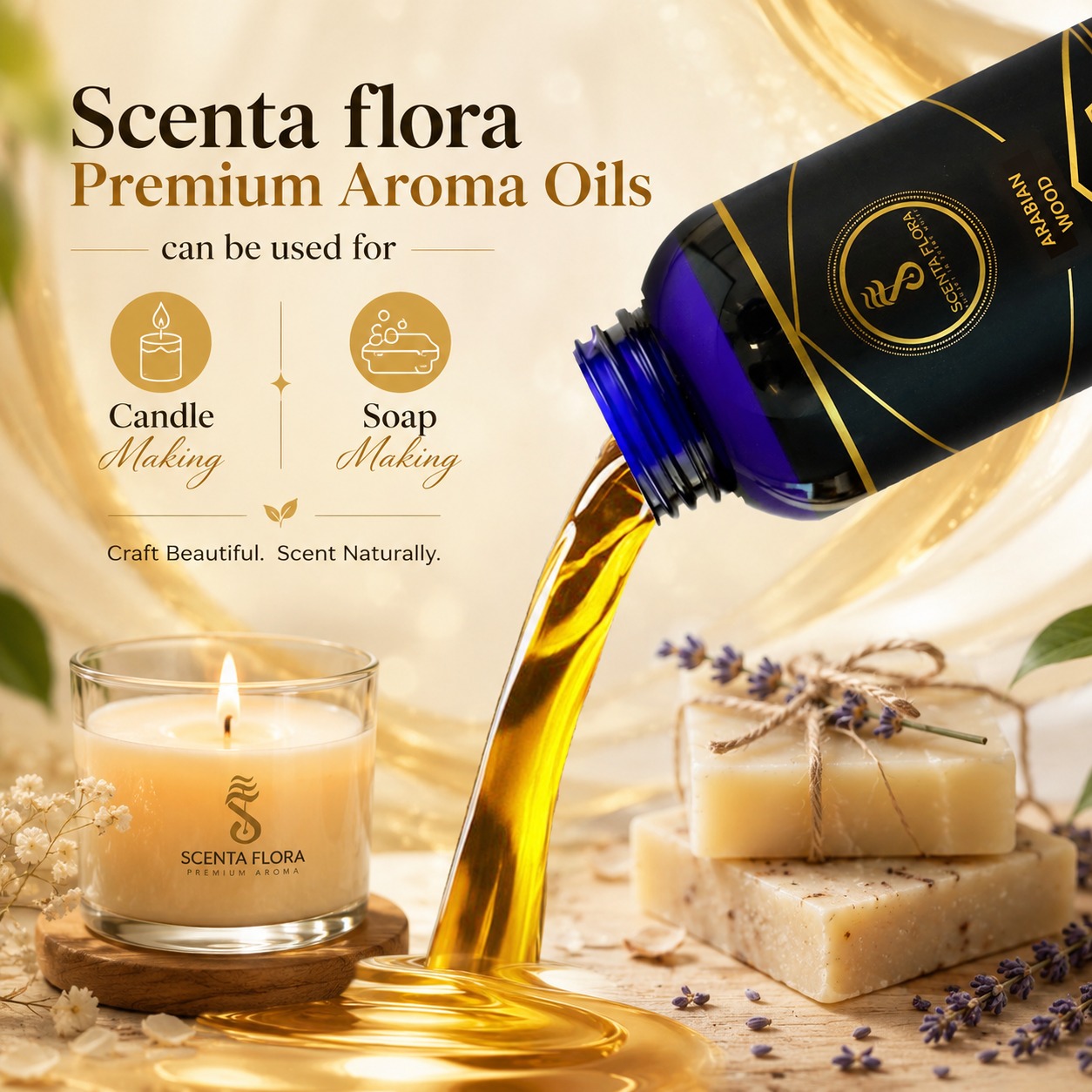
A lot of people discover this accidentally.
They buy a luxury diffuser oil for their home, become obsessed with the scent, and then start thinking about other ways to use it.
Usually it starts with a candle.
Then comes the idea of making a soap bar, wax melts, linen sprays, or even small handmade gifts using the same fragrance profile.
The assumption feels logical. If the oil already smells good in a diffuser, why should it not work elsewhere?
Technically, many fragrance oils can be used across multiple products. But this is also where things get misunderstood very quickly, especially in DIY communities online where fragrance advice is often oversimplified.
Not every oil is designed for every application. More importantly, not every usage level is safe across every product category.
That distinction matters far more than most people realize.
At Scenta Flora, fragrance oils are not marketed as “multi-use” simply because they smell pleasant or perform well in a diffuser. Every formulation comes with verified IFRA certification, which outlines exactly where and how the fragrance can be used safely, whether that is in candles, soaps, ambient scenting, or other applications.
And honestly, that level of transparency is what separates premium fragrance formulation from generic fragrance reselling.
The Fragrance Industry Has a Quality Gap Nobody Talks About
One thing people learn very quickly after entering candle or soap making is how inconsistent fragrance oils can be.
Two oils may smell almost identical straight out of the bottle, yet behave completely differently once they are actually used.
One fragrance remains rich and balanced after curing in soap. Another fades within days.
One candle fills a room beautifully when burned. Another barely throws scent at all despite using the same wax and wick setup.
Most of this comes down to formulation quality.
Cheaper oils are often designed to create a strong first impression rather than long-term performance. They smell intense initially, but the composition may not remain stable under heat, during curing, or when mixed with other ingredients.
Higher-end fragrance oils are usually built differently from the start.
The raw materials tend to be cleaner. The blends are more refined. The fragrance structure itself is often more balanced, which makes the oil adaptable across different environments rather than suitable for only one.
That adaptability is why certain luxury fragrance oils transition surprisingly well from diffusers into candles or soaps.
But versatility alone is not enough.
Safety is the real conversation.
A Candle and a Soap Bar Are Treated Completely Differently
This is where many beginners make mistakes.
They assume fragrance percentages should stay roughly the same across products because the oil itself is the same.
In reality, fragrance regulations are based on human exposure.
A candle fragrances the air.
Soap touches skin.
That single difference changes everything.
When a fragrance is used in soap making, the formula falls under IFRA Category 9, which applies to rinse-off products. Since the product comes into direct contact with skin, fragrance limits are often lower and much more controlled.
Candles, on the other hand, fall under IFRA Category 12 because they are considered ambient products rather than skin-contact products.
That means candle formulations can often handle significantly higher fragrance percentages.
This is why experienced makers never rely on guesswork when working with fragrance oils. They check documentation first.
Without proper usage guidance, it becomes very easy to over-fragrance a soap while assuming the concentration is harmless simply because the scent feels soft or luxurious.
Fragrance safety is not determined by whether something smells “natural” or “strong.” It is determined by chemical composition, concentration, and exposure level.
That is exactly why IFRA standards exist.
Most DIY Advice Online Leaves Out the Important Part
If you search online forums or social media, you will find thousands of people casually recommending fragrance percentages without mentioning certification, compliance, or category restrictions.
That creates problems.
A fragrance oil might perform beautifully in a candle at 10%, yet only be approved for soap at 2% or 3%. Someone following random internet advice may never realize there is a difference.
Professional makers take this seriously because they understand that fragrance is not just about creativity. It is also about formulation responsibility.
This becomes even more important for small businesses selling handmade products commercially.
Customers today pay attention to ingredients. They ask questions. They expect transparency.
Using IFRA-certified fragrance oils helps makers formulate with confidence instead of relying on assumptions pulled from social media comment sections.
And from a business perspective, documentation matters.
It shows your products are being created with standards rather than improvisation.
Why Premium Oils Usually Perform Better in Candles
Candle makers tend to notice fragrance quality immediately because candles expose weaknesses very fast.
An unstable fragrance can interfere with burn performance, create weak hot throw, or even alter how the wax behaves during curing.
Premium fragrance oils generally perform better because the formulation process is more controlled from the beginning.
You usually get:
- Better scent retention
- Cleaner hot throw
- More balanced cold throw
- Greater consistency between batches
- Better compatibility with different waxes
Interestingly, stronger fragrance is not always the goal.
A well-made candle should feel smooth and layered while burning. Overly aggressive scent can actually make a candle feel cheaper rather than more luxurious.
This is one reason luxury home fragrance brands focus heavily on balance instead of intensity alone.
The scent should feel present without dominating the room.
Soap Making Is Less Forgiving Than People Expect
Soap making introduces a completely different challenge.
Cold-process soap, especially, can alter fragrance character dramatically during saponification and curing. Some notes disappear. Others become sharper. Certain oils accelerate trace or discolor the final bar.
Experienced soap makers already expect this.
What they want from a fragrance supplier is predictability.
They want to know:
- Is the oil skin safe?
- What percentage is approved?
- Will the fragrance remain stable?
- Does it behave properly during curing?
This is where technical documentation becomes just as valuable as the fragrance itself.
Beautiful scent alone is not enough if the formulation creates instability later.
Transparency Is Becoming a Bigger Deal in Luxury Fragrance
There has been a noticeable shift in consumer behavior over the last few years.
People are becoming more selective about what they bring into their homes, especially in premium lifestyle markets.
They want better ingredients.
Cleaner formulations.
More transparency.
Less vague marketing language.
The fragrance industry is slowly moving in that direction too.
At Scenta Flora, IFRA certification is part of the conversation because customers deserve clarity about how fragrance oils can actually be used. That information matters whether someone is creating products professionally or simply experimenting with candle making at home.
And honestly, it builds more trust than generic claims ever will.
So, Can You Use Diffuser Oils for Candle and Soap Making?
Yes, many premium diffuser oils can absolutely be used in candles and soaps.
But the smarter answer is this:
You should only use fragrance oils that are properly formulated, professionally documented, and certified for the specific application you are working with.
That is the difference between simply making something smell good and creating a product that performs properly, safely, and consistently over time.
Good fragrance formulation is part creativity, part chemistry.
The brands that understand both are usually the ones worth working with.